
Seeding the algorithm
...to the rhythm of my own dance.

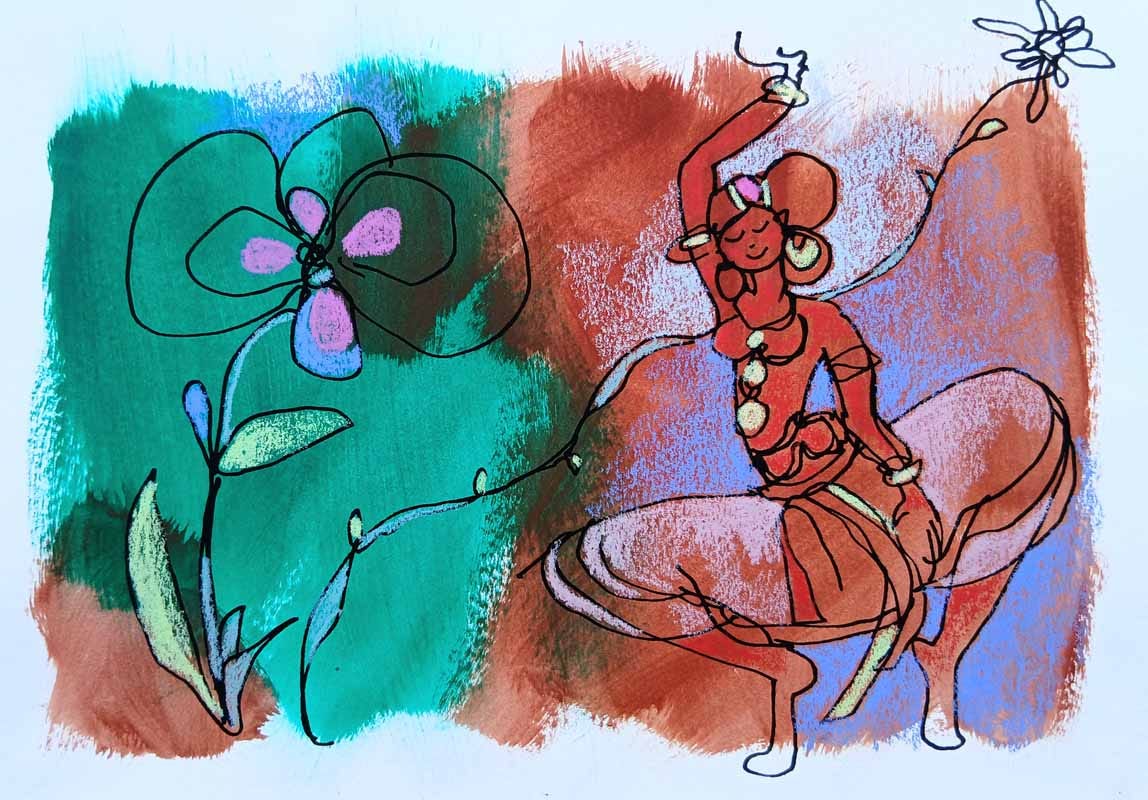
There’s something a little weird about spending hours and hours writing an essay which then gets distributed by an algorithm for precisely two days before being dropped. My writing is being swallowed up at a rate of knots as everything dances to a rhythm which was never chosen by me.
Books, or articles in paper magazines, can stay current for years, even decades, but here on Substack, if you need to break your weekly rhythm for whatever reason, the algorithm drops you like a hot potato. Bang. Audience gone, or at least, substantially reduced.
What do you do if you’re a Substack writer and your writing asks for a pause? Perhaps if you’re here to earn a living from writing you just tell yourself to get on with it; maybe you go back to advice on writer’s block, or have your own ways of disciplining yourself, tricks that you’ve learnt over the years. But if you’re not here to ‘earn a living’?
My understanding is that creating things tends to work cyclically. There are times when everything flows easily, times when things stutter, and, inevitably, times when everything just has to stop for a while.
In this situation, I’ve learnt that it’s actively damaging to try to force things. ‘When you force it, you block it’ is my most read essay; it seems there are other people out there thinking about this too. I want to honour my current need for a pause, but I’ve spent 60 weeks consistently publishing and I don’t want to lose my place in the algo hierarchy. The algo is my distribution manager and it does quite a good job of introducing me to new people and keeping things alive.
Last year the weekly structure worked well for me; it made sure that things were not too open-ended, while still leaving me in control of whether or not I wanted to try to meet that Sunday deadline. But things change, and now there’s a need for space. Space.
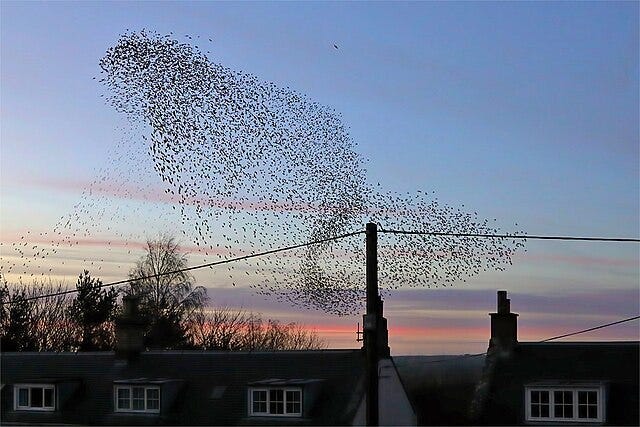
For me, a piece of writing is an example of emergence. I can’t just sit down and decide to build something, brick by careful brick. I know lots of people do work like that, but not me. I have to clear everything out, make a big space, remove any sense of trying or pressure or intention, and wait.
I have to be actively waiting, though. If I wander around doing other things and don’t give the possibility of writing a second thought, nothing will happen. I have to point myself in a certain direction, and then I have to subtly feed myself, but in an unstructured way. I have to interact with things, without trying to form connections or grasp ideas. If enough different elements are allowed to interact with each other, in a way that doesn’t predetermine the nature of their connection (in other words, without me interfering and saying, ‘oh, I could write about that’, or ‘hey, that connects to that!’) over a sufficient period of time, sooner or later something begins to write itself. Space, waiting, and lack of pressure, are essential. Nothing can be forced to a schedule.
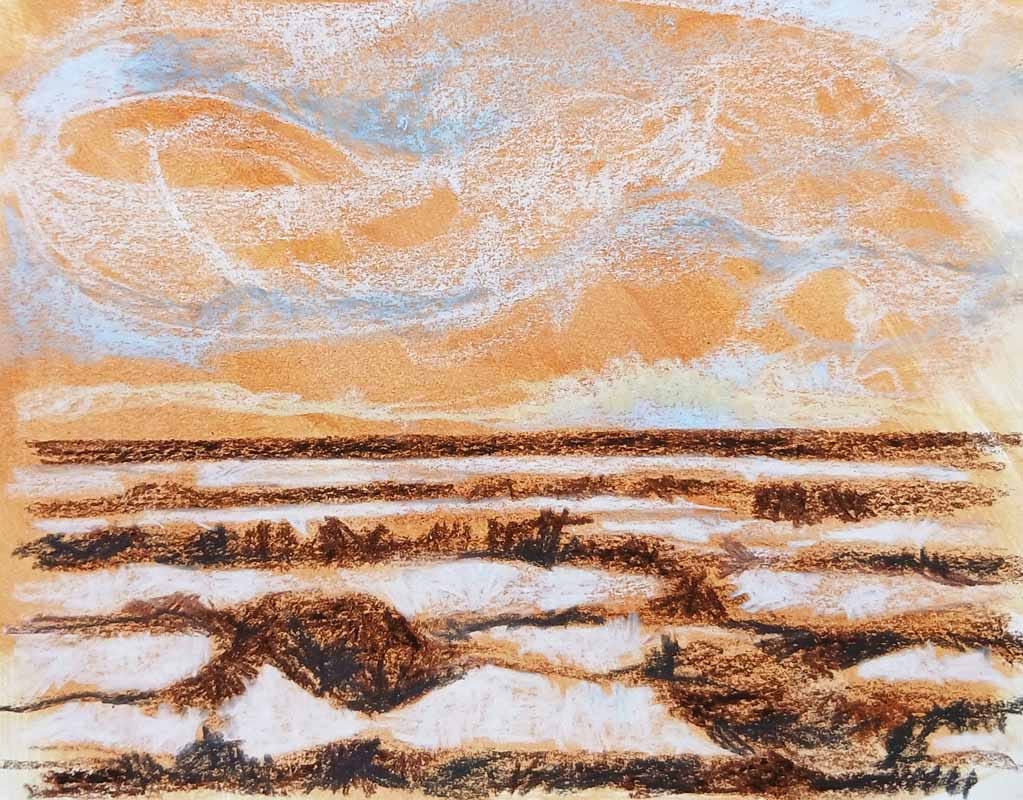
But sometimes the space needs to be extended because a cycle has come to an end, which is what happened to me in December. The snow gently descended onto the winter field, and everything went quiet. So what now? How am I going to make space for the slow and silent interactions through time which I need to give my writing new life - within the tight strictures of the algorithm’s preference for weekly posts?
The algorithm does have a number of positive aspects. It seems to be continually expanding my audience. New people find me, and some of them sign up. These new people though, have never seen anything else that I’ve written, and very few of them are likely to go back and look at my back catalogue. It would make sense, not only for my own creative sanity, but also in terms of not abandoning what I’ve already written, to feed some of my ‘past’ work back into the system.
Oh, I think, but that would piss off the people who’ve read already-published things. This is a nonsense. My subscribers are busy; Substack is continually feeding them new work from new people, and they’re likely to have missed much of what I’ve written. Maybe some of them might even like to read something again, or if they don’t, they can just scroll on by. If they don’t like it, they can unsubscribe, what does it matter?
It’s only bonkers internet culture/social media which says that what I’ve already written is past. I don’t have to accept the idea that I’m on a thin line of time which is relentlessly moving forward at breakneck speed. This is what the algorithm imperative does - constantly pushes from behind, whispering, ‘you’re only as good/seen/interesting as your last publication, quick, make another'…’
But, as I argued in my series on Time, linear time is not a fact, it’s simply a convention; and one that tends to serve the vested interests of people with power. When you look at the natural world, you see instead cycles, and seasons. Life moves to rhythms, forever cycling back or spiralling upwards or downwards, returning and repeating in new iterations.
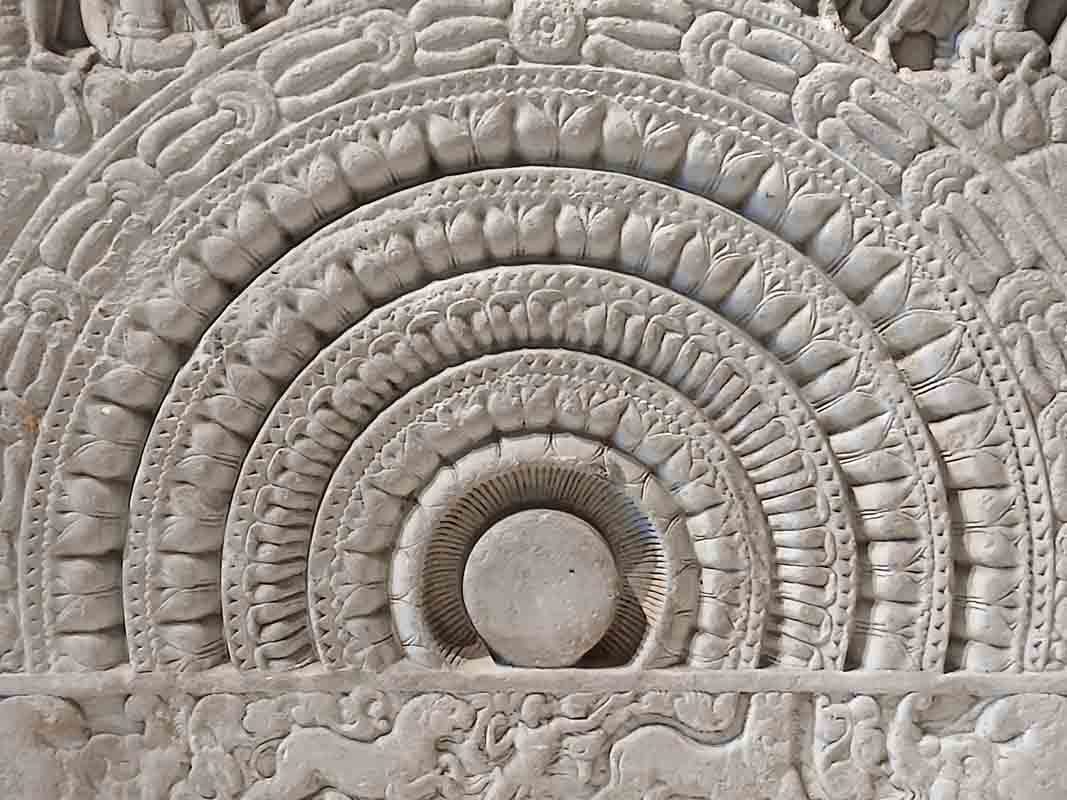
How might it be in art, in personal processes and cultural expectations, if the focus was on seasons, cycles, or simultaneity, rather than the desire for the continual combustion of new, forward-moving explosions? What might reveal itself from a circling back, over and over, or attention to parts of the weave that didn’t get much attention the first time round; or perhaps from setting out to investigate the way that things regularly fall into grooves, but each time in a slightly different way?
I could escape from the targeted machinations of social media - designed to stimulate every human’s potential for addictive behaviour - not only by slowing down, but by deliberately stepping off the assumed timeline and seeding my Substack field in a non-linear way, with work from any part of my writing store.
I’ve noticed a few people starting to do this; regularly bringing different parts of their work back into circulation, instead of leaving it to languish behind them. To make myself some space, and give myself some time for thinking and research, this is what I may do.
I like the idea of using seasons and cycles as a guide. It feels more natural than the algorithmic approach, which can spiral out of control sometimes. I do seek out old posts with some of the people I follow -- especially if I feel a resonance on a particular topic.
It's interesting that I saw this post from you today when I hadn't seen any recently, and even thought you hadn't posted for a while - I don't seem to get notifications of your posts anymore, I am not sure why...
I am also struggling to get started after the December break. I don't post every week but I did get into a fortnightly rhythm that was working for me though I noticed the views were decreasing with each post.
At the same time, I noticed that most if not all of the new subscriptions I am getting come from Notes. As much as I started my Substack to get eyes on my ceramics, I did it because I couldn't/didn't want to keep up with short-form Instagram-like content, meaning I was hoping it would be my writing about my process and my pieces that would interest people - I guess the way it happened with you :).
Now, I find myself at a point where I no longer know what to do... Writing is not what I do for a living so writing a post actually cuts into my making time, and making pots is what I am hoping to make money from...
I'm sorry - I am using your comments section to try to work out my issues...
I have thought about re-posting and somehow felt bad about it, for similar reasons to the ones you describe. But this idea of seasons and cycles makes absolute sense to me and I think it's what I will do too. So, thank you for articulating this for me - and now I'll try to find time to read your posts on Time (I guess there's a pun in there somewhere...) which I seem to have missed entirely.